A well-made sandwich often looks simple, yet small choices change everything about how it holds together and tastes.
Many lunchboxes end up with soggy bread, slipping fillings, and uneven bites, even when the ingredients are solid. Attention to structure, slicing, and layering has become a focus among food creators who study what makes a sandwich stay intact from the first bite to the last.
A widely discussed insight from sandwich expert Owen Han has brought fresh attention to a habit many people follow without thinking twice: leaving a “hinge” when cutting bread.
Sandwich creator Owen Han, often referred to as the “King of Sandwiches,” highlights a small slicing habit that can change the entire eating experience. A common approach keeps one side of the bread attached, forming a hinge.
He calls it a recurring flaw in sandwich building.
“This is a big pet peeve,” Han noted in a conversation with the Daily Mail.
He explained that a hinge often disrupts structure in a way that affects the entire sandwich. According to him, “A hinge often causes fillings to bunch, slide, or tear through the connected side.”
Instead of leaving one side attached, cutting the bread fully through creates two balanced halves that hold ingredients more evenly.

Instagram | owen.han | Owen Han says to never leave a hinge on your bread; slicing it completely through keeps your fillings from spilling.
Why a Full Cut Changes the Structure
A complete slice through the bread does more than separate the halves. It distributes pressure across both sides, allowing each piece to support the fillings independently. This prevents one section from absorbing all movement while eating.
Han describes the impact clearly:
“Cutting fully through your sandwich bread instead of leaving a hinge creates a cleaner, more even structure. This distributes pressure across the entire sandwich rather than forcing one side to bear all the tension.”
The result is a steadier build where ingredients stay aligned and every bite carries a consistent ratio of bread to filling. The texture also improves because the sandwich compresses more evenly rather than folding unevenly at one point.
A collaboration with Schlotzsky's Deli has also spotlighted this method, reinforcing how slicing style influences structure and taste.
Smart Layering That Prevents Soggy Sandwiches
Building a sandwich goes beyond cutting technique. Ingredient order plays a major role in how well it holds together during travel or storage.
Han suggests a practical layering approach that focuses on stability and flavor balance:
1. Choose bread that sits between soft and firm textures
2. Spread sauce on both slices of bread to build moisture protection
3. Place meat and cheese first to form a solid base
4. Add lettuce, tomato, or other wetter ingredients next
5. Keep oily or heavily dressed items toward the top
6. Add acidic elements like pickled onions or fresh tomato for contrast
He also notes that thicker bread calls for more generous fillings, while lighter bread works better with simpler layers. This balance prevents overpowering one ingredient over another.
For those packing sandwiches ahead of time, keeping sauces on the side and adding them just before eating helps maintain freshness and prevents sogginess.
The Upside-Down Bread Slicing Trick
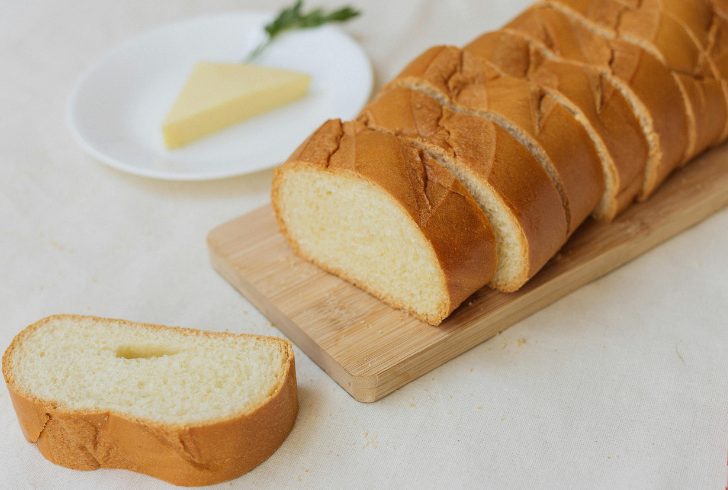
Freepik | Slice bread upside down so the flat crust gives you a stable, slip-free cut.
Beyond sandwich assembly, bakers have explored another simple technique that improves slicing accuracy: flipping the loaf before cutting.
A typical loaf has a curved top crust and a flatter base. Cutting through the curved surface can cause the knife to slide off balance. When the bread is flipped upside down, the flat base creates a steady surface, allowing cleaner cuts.
A TikTok clip from the café group Daisy Green Collection shows a baker slicing a charcoal sourdough loaf after flipping it. The caption reads: “Life hack…slice your bread upside-down and it'll be straight almost every time.”
This approach reduces uneven slices and helps maintain consistent sandwich portions.
Origins of the Sandwich and Its Long Journey
The sandwich has roots in 18th-century England, with early mentions by historian Edward Gibbon describing “bits of cold meat” as a “Sandwich.” The name is linked to John Montagu, 4th Earl of Sandwich, who is said to have popularized eating meat between bread either to avoid leaving a gambling table or to continue working without interruption.
Over time, this simple idea evolved into one of the most widely eaten foods across the world. In the United Kingdom alone, over 11.5 billion sandwiches are consumed each year, a volume that could circle the globe about 44 times if lined up end to end.
Despite its simplicity, sandwich quality depends heavily on small preparation choices. Cutting style, ingredient layering, and balance between moisture and structure directly affect the final result. A full cut instead of a hinge, along with careful stacking of fillings, helps maintain shape and improves overall bite experience.
Even minor adjustments in preparation often determine whether a sandwich stays intact or falls apart before the last bite.